
By TXPAGES Team ·
Farm and Ranch Fence Maintenance
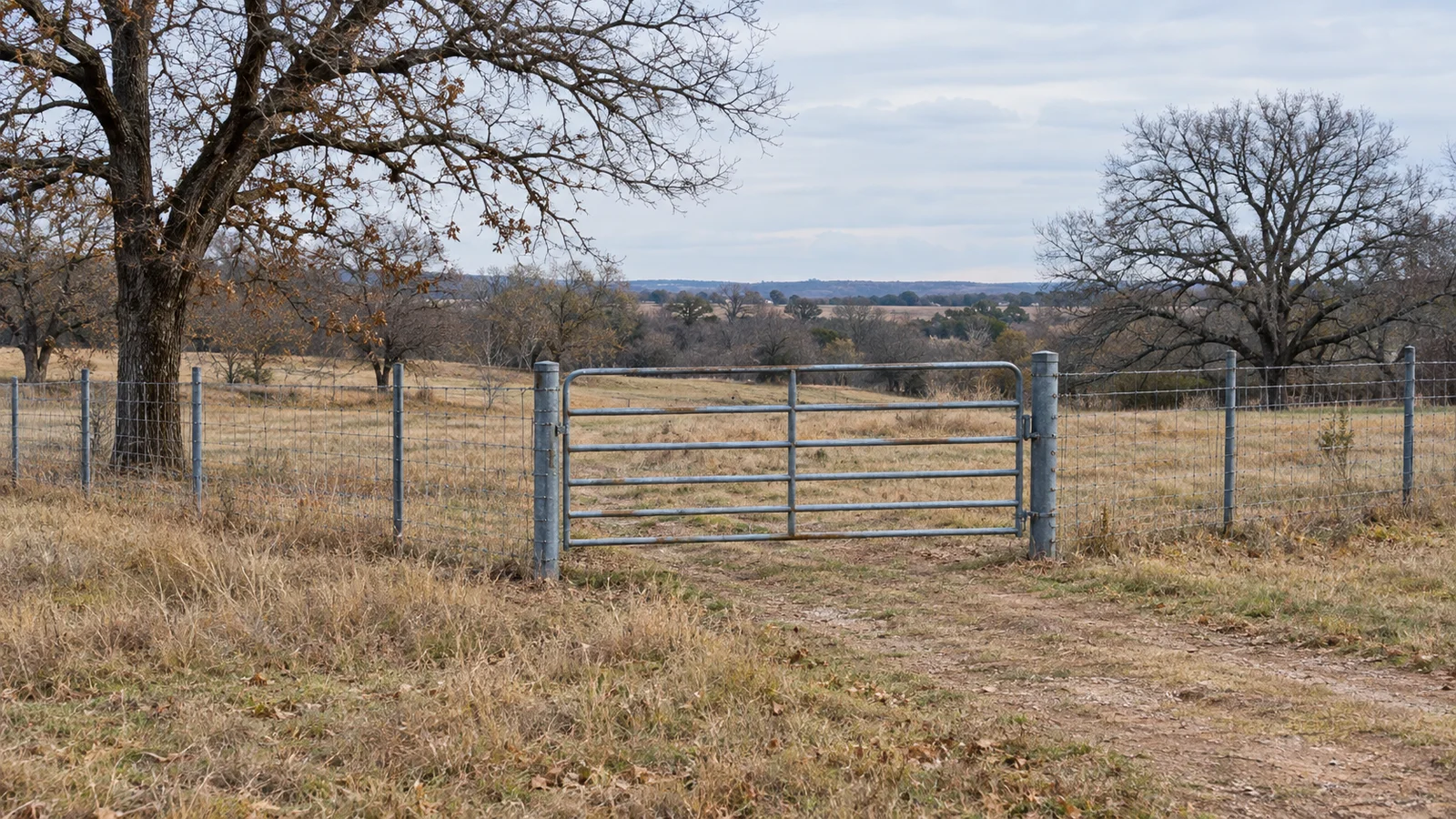
A winter ranch fence review in Bowie should focus on safe observations and how the property will be used. Check accessible areas from a secure position, record visible concerns and identify which gates will matter for seasonal routines. Do not assume that a walk-around proves the fence can contain every animal.
This is a preparation checklist, not a repair manual. Tensioned wire, unstable supports and heavy gates need qualified attention. Keep people and animals away from an unsafe area and arrange a suitable containment plan rather than improvising repairs from an online article.
Review pasture use before reviewing fence appearance
Write down which areas will be occupied and how animals, feed and equipment move between them. Note any change from the previous season. A gate used occasionally earlier in the year may become more important when property routines change.
Affordable Fencing lists barbed wire and non-climb fencing for local ranches on its Bowie service-area page. Its farm and ranch fencing page also describes field fence, net wire and cross-fencing. Ask for a condition and suitability review of your actual arrangement rather than relying on a material name alone.
For example, moving livestock into a different pasture changes which interior gates and boundary runs are most important. Include those changes in the repair discussion so the scope follows intended use.
Record visible concerns without manipulating wire
Photograph accessible locations from a safe distance and mark them on a simple property sketch. Look for visible openings, displaced material or a gate that no longer closes normally. Describe the concern without assigning an unverified cause.
Do not pull on loose or tensioned wire, push a leaning support or lift a dragging gate. Such actions can create movement you did not anticipate. A clear location and photograph are useful without unsafe testing.
If a section cannot be approached safely, record that limitation. Ask the contractor how to evaluate it; do not claim the rest of the fence is sound because a visual problem list is short.
Use a pasture-and-gate review worksheet
| Review area | Safe information to record | Follow-up question |
|---|---|---|
| Occupied pastures | Animals and seasonal use | Which boundaries need priority review? |
| Perimeter sections | Visible openings or displacement | What evaluation and repair are proposed? |
| Interior divisions | Routes between occupied areas | Are connections and access still suitable? |
| Gates | Closing or movement concerns observed | Which parts need qualified attention? |
| Equipment access | Planned feed or maintenance routes | What must remain available during work? |
| Work sequence | Temporary containment options | How will an open section be managed? |
Keep observations separate from a professional inspection. The worksheet organizes the conversation but does not establish structural adequacy or animal containment.
Compare repairs by the problem addressed
Affordable Fencing lists post replacement, damaged-panel repair and gate work on its fence and gate repair page. Ask what the proposed work addresses and what remains outside the scope. A repair description should identify its location and included parts.
If multiple concerns are present, request a clear priority discussion rather than assuming the smallest visible defect is the most important. Explain which pasture or access function depends on each area.
Do not promise that a specific repair will prevent every future failure or escape. Ask for the contractor's explanation of expected function, remaining limitations and any recommended follow-up.
Coordinate the repair window
Tell the contractor how livestock can be kept away from the work area. Agree on who manages temporary access and containment. A fence repair may require more operational planning than its length suggests.
If work involves post replacement or other digging, discuss required utility notification. Texas811 names fence repair among digging activities needing advance planning, even on privately used property.
For automated gates, keep any abnormal operation separate from ordinary fence observations. CPSC automatic-gate safety guidance warns of entrapment risks from moving automatic gates. Request qualified operator service rather than bypassing protections or adjusting force settings.
Review records as well as the fence
Gather past repair notes, photographs and available material information. The history may help explain which sections have been modified or retained, but it should not substitute for the current condition review.
Keep the final written proposal with the property sketch. After the work, ask what care or follow-up applies to the actual repair. A concise record is useful when planning later work or describing another concern.
Questions Bowie ranch owners ask
Does a visual review confirm the fence will contain livestock?
No. Treat it as a way to identify concerns for qualified evaluation. The actual animals, fence arrangement and condition need consideration.
Should I tighten loose wire before requesting a quote?
Do not use this checklist to handle tensioned wire or unstable components. Record the concern safely and ask for qualified service.
Can gates be left out of a pasture review?
Include them because they connect the occupied areas and access routes. A perimeter discussion that omits a problem gate may leave an important function unresolved.
Is winter the only time to review the property?
Use changes in property use and observed condition to guide review needs. This seasonal article does not establish a universal maintenance interval or weather guarantee.
Should past repairs be mentioned in the new review?
Yes, provide the history and point out retained or modified sections. Previous work can help explain the property, but it does not replace evaluation of the fence's current condition.
Request a use-and-condition review
Bring your pasture-use notes, photographs and containment arrangements. Call Affordable Fencing at (940) 626-9290 or request an estimate.
Ask for a repair proposal that identifies priorities, retained sections and work-area coordination. Safe observations should support a qualified decision, not replace one.