
By TXPAGES Team ·
Farm and Ranch Fencing
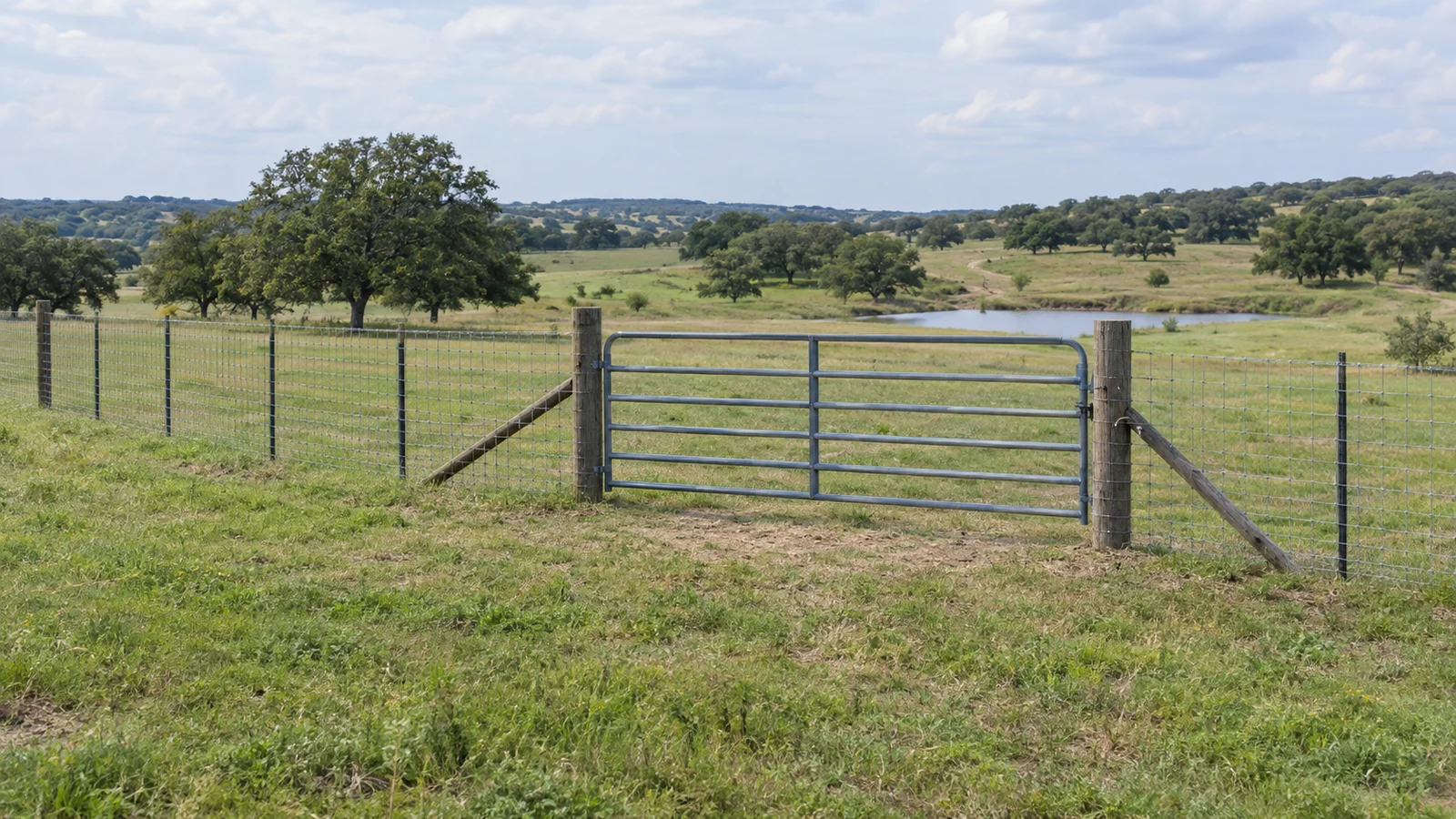
Farm and ranch fencing in Boyd works best as a property-use discussion before it becomes a material comparison. Identify the animals, pasture divisions and equipment routes you need to manage. A perimeter fence and an interior division may serve different purposes even on the same acreage.
The goal is not to select wire from an online picture and assume it fits every animal. Prepare a clear description of the property so the contractor can propose an appropriate system. Do not use this planning guide as a wire-tensioning or installation manual.
Describe the Boyd acreage and livestock clearly
List the animals currently kept on the property and any planned changes. Include separate holding areas, movement between pastures and gates used for feeding or maintenance. Explain known escape points or existing sections that no longer serve their intended purpose.
Affordable Fencing lists barbed wire, high-tensile smooth wire, woven field fence, net wire and pasture cross-fencing on its farm and ranch fencing page. Those are different options to discuss, not a claim that each one is suitable for every species, size or management arrangement.
A small example makes the distinction useful: dividing a pasture for planned rotation is a different request from replacing an entire perimeter. Ask the contractor to separate the tasks and show how gate locations support movement between areas.
Map boundaries and working access separately
Bring available boundary documents and identify any alignment uncertainty. Record existing fence lines as existing features, not verified legal boundaries. Discuss the evidence needed before the proposed route is accepted.
Mark where trucks, trailers, tractors or other equipment currently enter. Describe how they approach the opening rather than providing only a vehicle width. Turns, approaches and the space around an entry need a site discussion; an opening that looks adequate in a straight line may not explain the full access need.
The Boyd service-area page specifically identifies acreage fencing, pipe corrals and privacy fencing. Use that local service information to start the conversation, while keeping your own livestock and equipment requirements explicit.
Use a pasture-planning worksheet
| Area or function | Information to bring | Scope question |
|---|---|---|
| Perimeter | Available boundary documents and existing condition | Which sections are included? |
| Livestock areas | Animals and management needs | What system is proposed for each area? |
| Cross-fencing | Intended pasture divisions | Where will movement between areas occur? |
| Equipment entries | Vehicles, trailers and approach routes | What gate arrangement fits actual use? |
| Corners and transitions | Visible changes in direction or terrain | How are these addressed in the proposal? |
| Existing material | Sections intended to remain | What will be reused, removed or replaced? |
This worksheet should identify decisions, not prescribe post spacing, wire tension or construction details. Those belong in a qualified contractor's site-specific design and installation process.
Compare systems rather than strand counts alone
Ask the contractor to explain the proposed wire, supporting assemblies and gate connections as one system. A simple material label or strand count does not describe every part of a livestock fence. Request clarification about transitions between existing and new sections.
If two estimates differ, find the scope difference first. One may cover only the main run while another includes corners, gates and removal. A comparison is useful only when you know whether both proposals address the same property-management problem.
For a ranch entry or a section intended to combine pipe with wire, review the company's pipe fencing options. Do not assume that adding a visually substantial entry changes the containment suitability of every adjoining fence section.
Prepare for construction without creating a temporary gap
Tell the contractor how animals can be moved or contained while the work area is open. Agree on access restrictions and who handles that coordination. Do not remove a section yourself before you have a workable temporary arrangement.
Ask how digging-related utility notifications will be handled. Texas811 includes building and repairing fences in its homeowner guidance, including work in a private backyard. Existing fence routes do not establish that excavation is clear of buried facilities.
Stay away from loose, damaged or tensioned wire that could move unexpectedly. Record concerns from a safe position and ask the installer to evaluate them. This article does not describe wire release, tightening or bracing procedures.
Questions Boyd acreage owners ask
Is one wire type suitable for every livestock area?
Do not assume that. Describe the animals and management needs, then ask the contractor to explain why the proposed system fits each part of the property.
Can cross-fencing be priced separately from the perimeter?
Ask for separate scope descriptions when they serve different purposes. That makes it easier to compare options and plan the order of work without confusing a partial project with a complete one.
Should gates be chosen only by their width?
Discuss the approach, equipment and daily use as well as the opening. Ask for a site-specific arrangement instead of relying on one approximate measurement.
Can existing fence material always be reused?
Have its condition and suitability evaluated. Identify proposed reuse in the written scope rather than treating it as an automatic saving or an acceptable connection.
Should future livestock changes be included now?
Describe realistic planned changes instead of asking the contractor to assume the property will always be used the same way. Request clarification about what the proposed system addresses and what a later change may require.
Ask for a property-use estimate
Bring your livestock list, pasture sketch and equipment access notes. Call Affordable Fencing at (940) 626-9290 or request an estimate.
Request an estimate that explains the proposed perimeter, divisions, corners, gates and work sequence. Clear containment and access requirements are more useful than asking for the cheapest unspecified ranch fence.